Everyone seems so cynical about Earth Day. I just received this in my inbox:
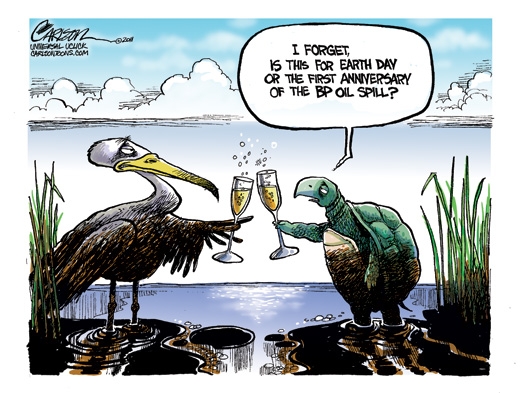
April 22, 2011
Everyone seems so cynical about Earth Day. I just received this in my inbox:
April 22, 2011
April 21, 2011
Student Research Associates in Vermont Law School’s US-China Partnership for Environmental Law:
Vermont Law School’s US-China Partnership in Environmental Law seeks three students to become Research Associates for the 2011-12 academic year beginning in Summer or Fall 2011.
The Student Research Associates will work under the guidance of Professor Jason Czarnezki and the China Partnership Program Team, and engage in significant scholarship and research on issues related to Chinese and American environmental and natural resources policy, global climate policy and U.S.-China relations. Student Research Associates will be joining the China Partnership’s emerging research team, and will be expected to attend weekly meetings with the program’s research faculty, visiting scholars, and LLM fellows. Students participating in the joint research project program are eligible to apply.
Interested students should send via email a cover letter, resume, and unofficial transcript to Professor Czarnezki.
April 21, 2011
Is is really true that the politics of “no” are so pervasive that compromise immediately ceases because politicians can’t be perceived as agreeing with the opposing party? In “What went wrong for cap-and-trade?” Ezra Klein, states:
So the question has to be how the Republican Party swung from a position of partial support for efforts to address global warming to unified opposition. But you won’t find the answer by looking into environmental politics. After all, the same thing happened to the individual mandate in health care, which went from being a Republican position in the 1990s and 2000s to a policy Republicans considered an unconstitutional monstrosity in 2010, and deficit-financed stimulus, which Republicans agreed with in 2009 but turned against in 2010. This “you’re for it so we’re against it” phenomenon is increasingly common in politics, and not limited to any one issue. Cap-and-trade is, for now, a casualty of the way party polarization has become policy polarization. And no one one has yet developed a reliable strategy for interrupting that process.
April 21, 2011
Today please join ELI, Island Press and Treehugger as we celebrate Earth Day 2011 with a Bookhugger live web chat with Jason Czarnezki, author of Everyday Environmentalism: Law, Nature and Individual Behavior (published by ELI Press). This live discussion will begin at 3 pm EDT on Thursday, April 21st, and can be accessed here:
April 21, 2011
Vermont Law School Professor Pat Parenteau in the NY Times. See here.
Patrick Parenteau, a professor and endangered species expert at Vermont Law School who was special counsel to the Fish and Wildlife Service in the 1990s, said he could empathize with both sides. “The agency does seem to be reaching a political tipping point,” he said. “They feel overwhelmed, they feel politically vulnerable, they can’t handle the job, and all these petitions makes it harder and harder.”
“But from an endangered species conservation perspective, the environmentalists are doing exactly what the science demands,” he added. “If you want to save these species, you have to list them, designate their critical habitat and spend money.”
April 20, 2011
See here.
April 17, 2011
More and more American universities are opening up campuses in Asia. Now this news that Yale will open a campus in Singapore. NYU already has a planned campus in Shanghai. These elite universities seem most comfortable with the stability of joing forces with major governments and/or universities they control as sponsors. The demand for this type of education exists in Asia, and I’ll be curious to follow whether these univeristies, if successful, will attract not only native populations but Americans interested in a more global education. I do expect this will fundamentally alter the nature of study abroad programs. This is all part of a huge overhaul in Asian higher education. The Chinese have already expended their undergraduate university system and are currently expanding graduate programs, and Hong Kong is reforming its education model to conform with mainland China and the United States, resulting in the anticipated hired of hundreds of additional faculty.
April 17, 2011
I earlier posted about how Wisconsin cities would begin to lose their recycling programs. It seems now that “Gov. Scott Walker is backing away from his proposal to eliminate mandatory recycling, and instead his administration is suggesting that some localities might want to merge their garbage collection to save money.” Full article here.
April 16, 2011
When I visited Sweden last month, citizens spoke of “strong society,” a goal and the platform that the public/society/social compact should provide its citizens with some basic services. When I watched “Waiting for Superman” last night (a very depressing film), the movie noted that while Americans are falling behind in math, reading, and education, we’re number #1 in thinking we’re doing great and better than anyone else (even though we’re not).
We’re We’re destroying our natural environment, the House wants to end Medicare, so many lack health care, our schools are in trouble, yet we have the strongest military in the world and politicians claim we’re the best at everything and the “greatest nation in the history of the Earth.”
I just want us to own the facts that our education and healthcare systems are failing, the rich are getting richer, the poor are getting poorer, and we’re number #1 in self-confidence and military strength.


 JASON J. CZARNEZKI