Uncategorized


I just arrived in Hong Kong and am very jetlagged (woke up at 4am). Today, I’m meeting with a series of Hong Kong professors as well as American Fulbright Scholars in Hong Kong.

On the plane across the Pacific Ocean, I finished reading Bill McKibbon’s book Eaarth. I think it’s a book very accessible to the general public, and it’s finest tribute is in making two points. First is the importance of scale; that when creating the next food system or energy transmission technology we need to consider smaller and more diffuse models. Second, he defines the biggest challenges and important items going forward as energy, food, and the Internet. I enjoyed the book, but was surprised so much of it was focused on food and Vermont. For the academic who reads about such issues all the time, this books provides little new information, but provides a useful new narrative. Finally of course the book’s overarching theme is that we live on Eaarth because the planet we lived on before, Earth, no longer exists and has already been changed by climate change.

Competition for grants opens on February 1, 2011. Please contact CIES at 202 686-4000 or scholars for more information about awards and the application process. You may also visit their website at www.iie.org/cies for information and specific program deadlines.

I just want to publicly thank the exceptional faculty and staff at The Wallace Stegner Center for Land, Resources and the Environment at the University of Utah’s  S.J. Quinney College of Law for organizing such a fantastic visit for me.

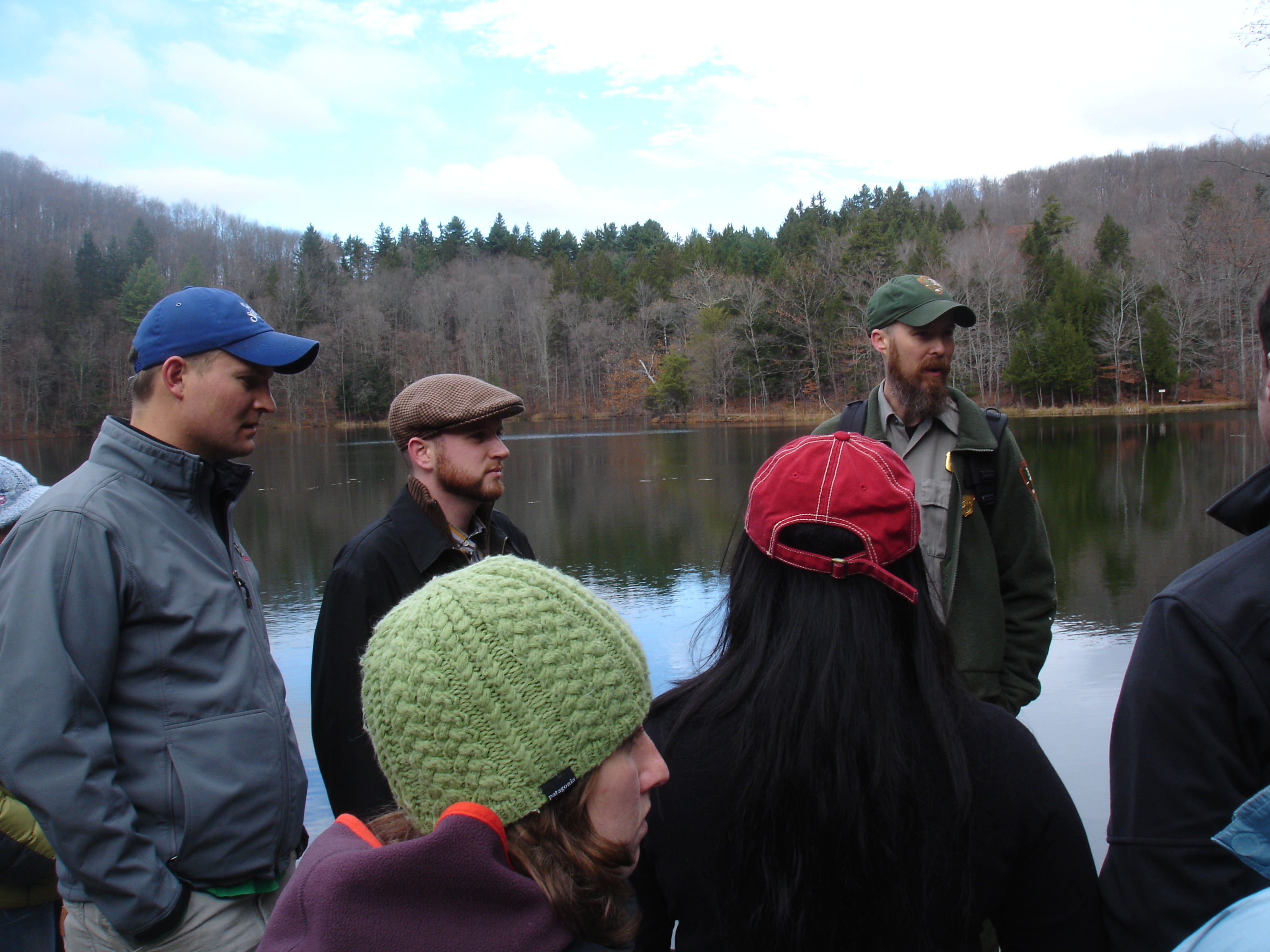
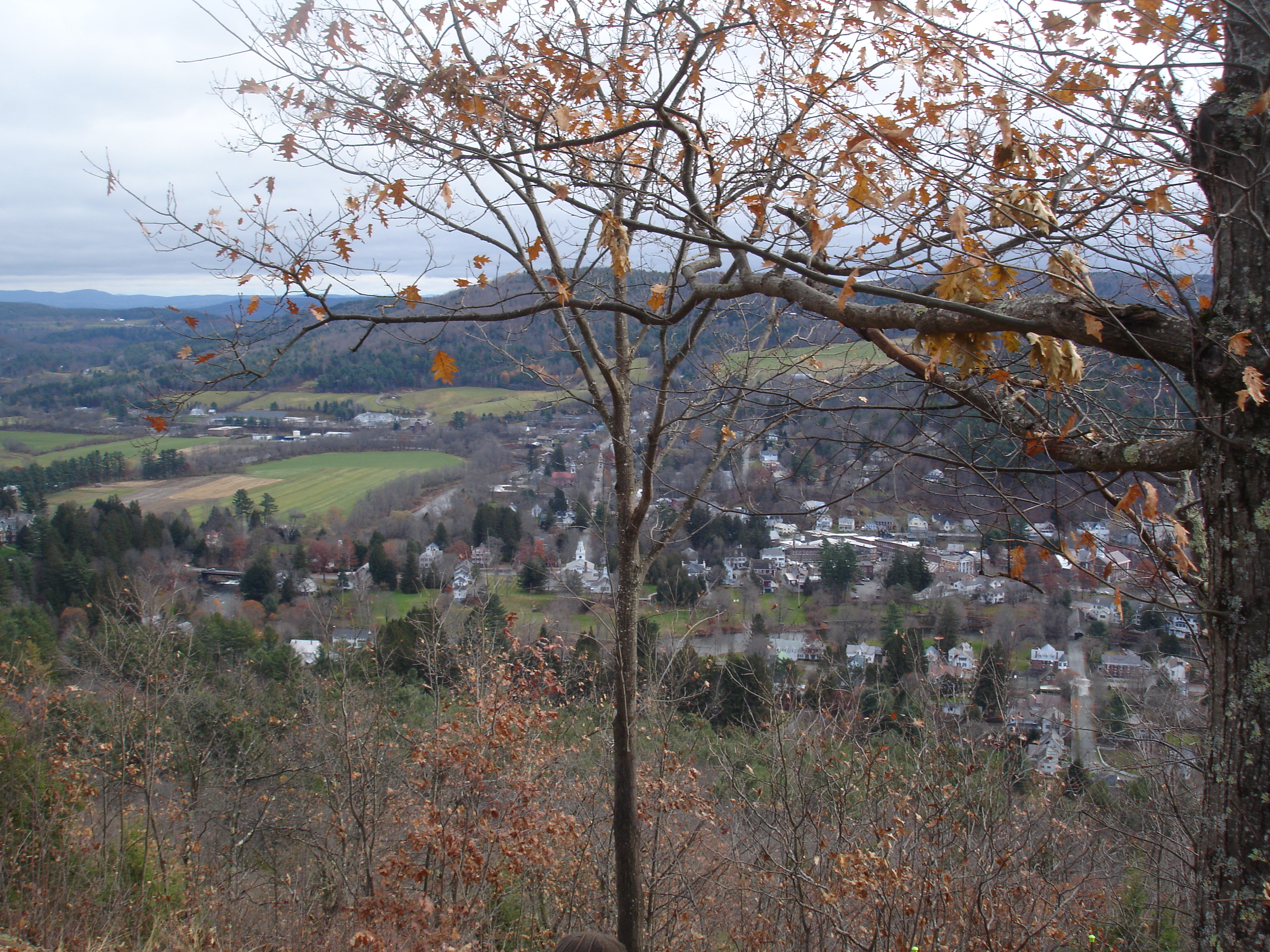
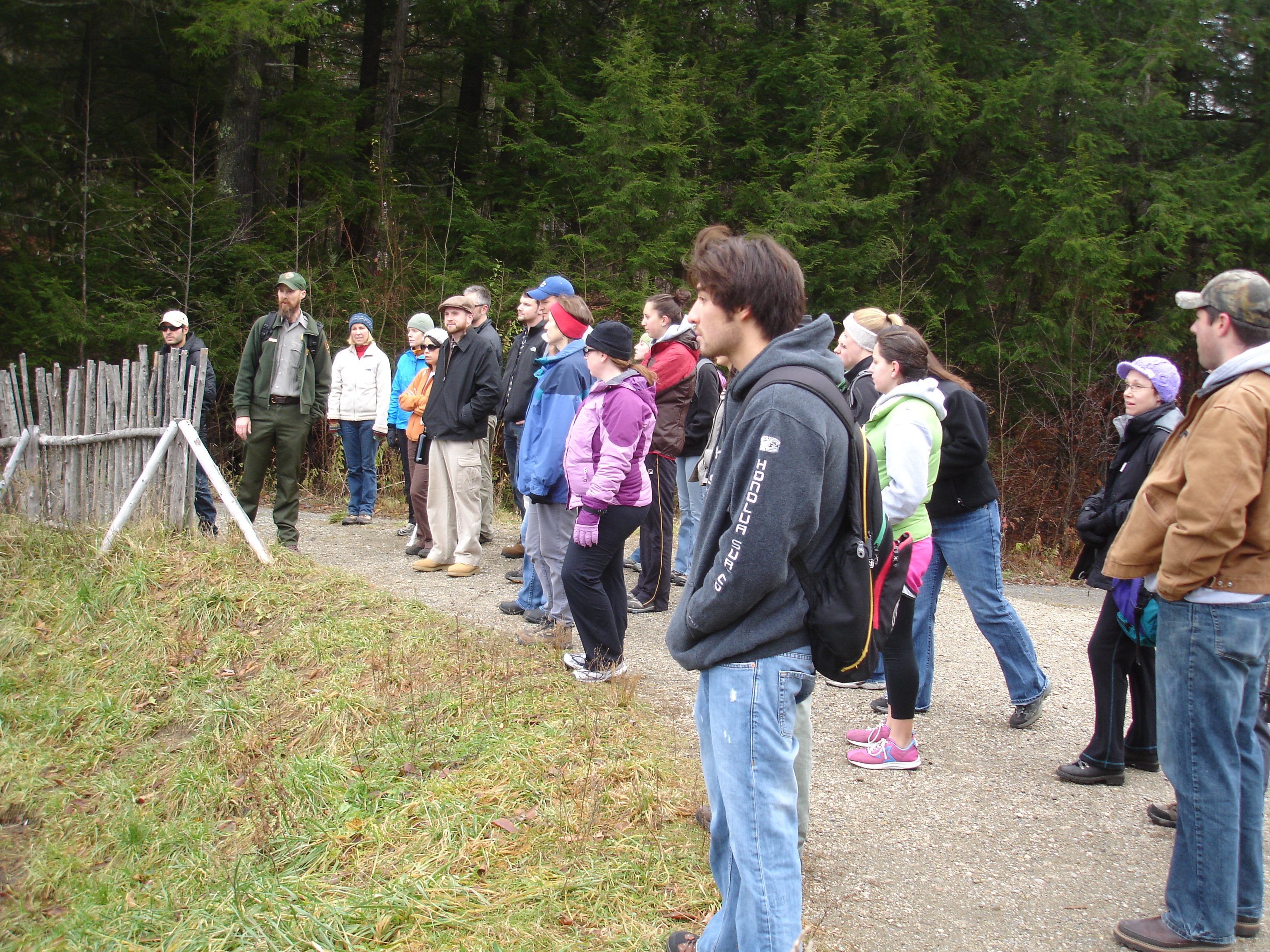
Every year I take my Natural  Resources Law class for a guided nature walk and tour of Marsh-Billings-Rockefeller National Historic Park located about 25 minutes south of Vermont Law School.  Here are some photos of this year’s excursion.

For many years, no trains.  Then progress and trains.  I was happy.  Then they wanted to stop the trains.  I was annoyed.  Then no trains.    I was in disbelief.

Now trains AND no trains.  Now, I’m just confused.  The Governor-elect of Wisconsin is against high speed train service, but wants the train maker to keep making trains in Wisconsin for said train service.  You can’t have your cake and eat it too.

A very interesting and concerning post in Green about the barriers to visiting national parks for minorities.

I’m kind of a political junkie so I’ve added “Politics” to by blog’s subtitle.  And when I’m completely swamped with work, I often pickup a political book to read.  This past weekend I bought “The Audacity to Win” by David Plouffe, Obama’s campaign manager.  The book so far (I’m half done) is a great read for political gurus and those who like inside baseball. Some initial thoughts:

  • While Obama’s strategy in Iowa was phenomenal, I’m still not sure what happened in New Hamsphire.  Plouffe suggests some ideas (Republicans/Independents who thought Obama had it in the bag and voted for McCain in the GOP Primary instead; Hillary Clinton’s emotional moment), but I would have liked to know a bit more about the numbers.  Also, it was clear early on that Obama had an Iowa strategy (win or go home), but I’m not convinced their NH strategy at the early stages was anything more than ride the wave of the Iowa victory.
  • Plouffe is hard on the campaign about how they handled Texas.  He argues they messed up, and rather than going for delegate counts in Ohio and Texas, they should have made a political decision to go all-in and win Texas, even if it meant giving up delegates in Ohio.  I just think this is wrong, and Plouffe is too hard on himself.  They had fixed on a two possible strategies after winning Iowa, (1) win NH and its over, and (2) a delegate fight. Making the decision they did make in Texas and Ohio showed the campaign’s discipline.  I will say that they did the political thing and went all-in in the Indiana primary much later, and that this worked to their benefit.
  • There is no doubt that Hillary Clinton was a very formidable candidate, would have won the nomination in  any other year, and that Obama was benefited in the general from the drawn out primary season.  Clinton’s strength was evinced in her ability to stay in the race after 11 defeats in a row by huge margins leading up to the PA primary.
  • I wonder whether the 2008 Democratic nomination will change perceptions in the media and public about how to win the nomination.  While momentum and big states will always matter, will delegate acquisition be the public strategy/story causing candidates to stay in the race longer that they might have in previous years?  Maybe, but still difficult given the realities of funding a campaign.
  • Money matters… a lot.  And I found the Plouffe argument in the book for why Obama opted out of public financing for the general election to be quite compelling.  The summary: staying in the system arguably cost Kerry the election in 2004.
  • On the VP front, the book explains that Clinton was given serious consideration, but that the finalists were Joe Biden, Evan Bayh, and Tim Kaine.  I would have liked to know more about how these three became the finalists and who was on the longer list.

I’m now at the point in the book where the Obama Campaign is going to announce its VP choice.

The 28th Annual Smith-Babcock-Williams Student Writing Competition sponsored by the  Planning & Law Division of the American Planning Association. The deadline for submission of entries is June 6, 2011. The Competition is open to law students and graduate planning students writing on a question of significance in planning, planning law, land use law, local government law or environmental law.   The winning entry will be awarded a prize of $2,500 and will be submitted for publication in /The Urban Lawyer/, the law journal of the American Bar Association’s Section of State & Local Government Law.  In addition to the first prize, the Competition will offer a second place prize of $1,000 and up to two Honorable Mentions of $250.  More info here.

I have just posted an new draft article on SSRN entitled, “The Future of Food Eco-Labeling: Organic, Carbon Footprint, and Environmental Life-Cycle Analysis.”  It can be downloaded at http://ssrn.com/abstract=1645860.

The Abstract:

Food choices contribute to the climate crisis, cause species loss, impair water and air quality, and accelerate land use degradation. The causes of these environmental costs are many—the livestock industry, diet, agricultural practices like pesticides and fertilization, and large-scale food transportation, processing, packaging and distribution systems. This Article describes the environmental consequences of the modern food system, and discusses existing public and private eco-labeling regimes, including carbon footprint labeling, country of origin labeling, and organic labeling under the U.S. Organic Foods Production Act and within the European Union. It also recognizes ambitious efforts like Sweden’s dietary information program that gives equal weight to climate and health and labeling program that requires food to be both produced organically and using low-emission production to meet certification requirements.


This Article considers the role of food eco-labeling in the United States in creating a sustainable food system. This Article discusses the merits of a creating a national eco-labeling program, replacing current federal organic food legislation; considers to what extent an American state could develop an food eco-labeling program that does not run afoul of existing government regulations about organic labeling; identifies the difficulties in developing an eco-label that considers a wider range of environmental assessment than existing organic and climate labeling programs, focusing in particular on the efforts of the European Food Sustainable Consumption and Production Round Table; and addresses the challenges to developing an environmental life-cycle eco-label that considers all phases of food production, processing and distribution.


This Article concludes that a state with a strong reputation for environmental awareness should, within the confines of the national organic certification program, develop a new environmental life-cycle eco-label that embodies and conveys to consumers a wider array of environmental information.

« Previous Page